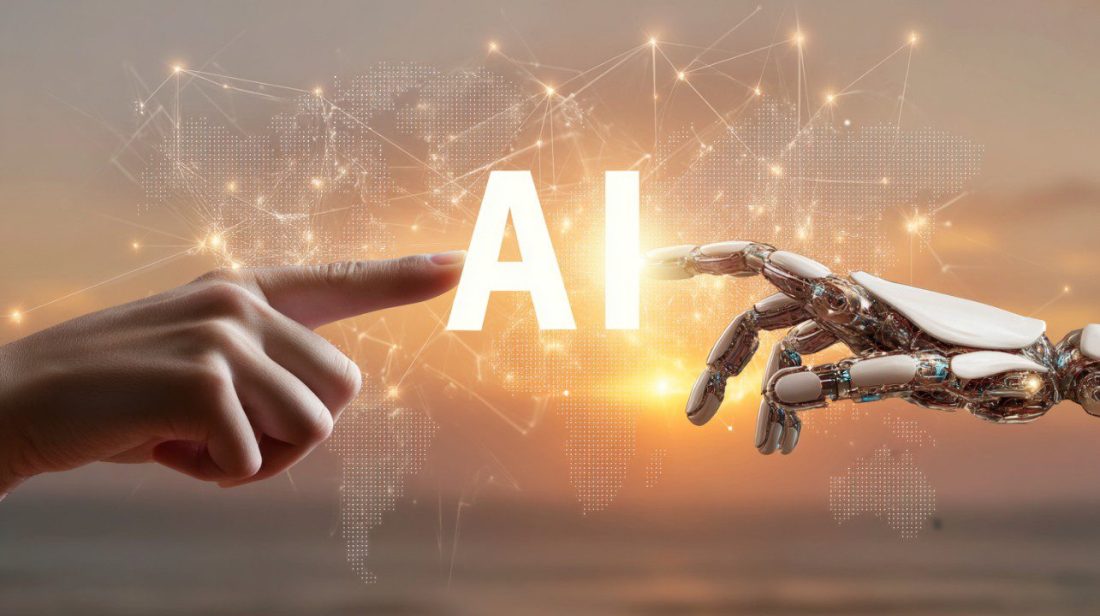
Artificial Intelligence is no longer a distant concept confined to science fiction or research labs. It has rapidly evolved into a transformative force reshaping industries, economies, and societies. As AI systems grow more sophisticated, their influence is expected to deepen across every aspect of human life. From healthcare and education to governance and creativity, the next phase of AI development could significantly redefine humanity’s future in four powerful ways.
First, AI has the potential to revolutionize healthcare and extend human longevity. Advanced machine learning algorithms are already being used to detect diseases earlier and more accurately than traditional methods. AI-powered diagnostics can analyze medical images, genetic data, and patient histories at unprecedented speed, helping doctors make faster and more informed decisions. In the future, predictive healthcare models may anticipate illnesses before symptoms even appear, shifting the focus from treatment to prevention. Drug discovery, once a decade-long process, is being accelerated through AI simulations that identify promising compounds in a fraction of the time. If this trajectory continues, AI could not only improve quality of life but also significantly increase global life expectancy.
Second, AI could fundamentally transform the global economy and the nature of work. Automation driven by intelligent systems is already reshaping manufacturing, logistics, finance, and customer service. While concerns about job displacement remain valid, history suggests that technological revolutions also create entirely new industries and roles. The rise of AI may lead to a workforce focused more on creativity, strategic thinking, emotional intelligence, and complex problem-solving—skills that machines struggle to replicate. At the same time, AI tools can empower entrepreneurs and small businesses by reducing operational costs and improving efficiency. The challenge for governments and institutions will be to ensure reskilling and education systems evolve quickly enough to support this transition. If managed effectively, AI could usher in an era of higher productivity and inclusive economic growth.
Third, AI may redefine how humans learn, think, and interact with knowledge. Intelligent tutoring systems can personalize education according to each student’s pace, strengths, and weaknesses. Instead of a one-size-fits-all classroom model, learners could access adaptive content tailored specifically to them. Beyond formal education, AI-powered assistants are already becoming everyday companions, helping people research, create content, manage tasks, and make decisions. As these systems grow more intuitive, they may function as cognitive extensions of the human mind. This could dramatically enhance human capability, enabling individuals to process complex information more efficiently and innovate at a faster pace. However, it also raises important questions about dependency, critical thinking, and the boundaries between human and machine intelligence.
Finally, AI could reshape global governance, ethics, and societal structures. Governments are beginning to use AI for urban planning, public safety, climate modeling, and resource management. Predictive analytics can improve disaster response, optimize energy consumption, and strengthen food security systems. On a broader scale, AI could help address global challenges such as climate change, poverty, and disease by analyzing massive datasets and identifying patterns invisible to human researchers. Yet, with this power comes responsibility. Issues of bias, privacy, accountability, and data security must be carefully addressed. Ethical frameworks and international cooperation will be essential to ensure AI benefits humanity as a whole rather than deepening inequalities or concentrating power in the hands of a few.
As AI continues to evolve, it is becoming clear that the technology itself is not inherently good or bad—it reflects the intentions and values of those who design and deploy it. The future shaped by AI will depend on policy decisions, ethical standards, innovation strategies, and public engagement. If guided responsibly, artificial intelligence could enhance human potential, reduce suffering, and solve problems once thought insurmountable. If neglected or mismanaged, it could amplify social and economic divides.
Humanity stands at a pivotal moment. The coming decades will determine whether AI becomes a tool that empowers global progress or a disruptive force that challenges existing systems beyond control. The opportunity is immense, but so is the responsibility. How we choose to integrate artificial intelligence into our societies today will ultimately define the kind of future we build tomorrow.
Source of URL- https://www.technewsworld.com/story/4-ai-driven-outcomes-could-define-the-future-of-humanity-180181.html

 Business Trends in Technology: Insights, Innovations, and Market Analysis